
TMJ Massage: Relieving Jaw Pain and Restoring Balance
TMJ Massage in Salt Lake City, UT
Relieve Jaw Pain, Headaches & Tension Naturally
Are you having issues with jaw pain, clicking, grinding, clenching, or tension headaches? You may be experiencing TMJ (temporomandibular joint) dysfunction, a common condition that affects the jaw joint and the muscles that control jaw movement.
At Jenna Baker Massage in Salt Lake City, Utah, I provide specialized TMJ massage therapy to relax surrounding muscle groups and by using inta-oral work to relieve jaw pain, reduce muscle tension, and restore healthy jaw movement — without invasive procedures.
If you’re searching for “TMJ pain relief near me” or “TMJ massage in Salt Lake City,” you’re in the right place.
What Is TMJ Dysfunction?
The temporomandibular joint (TMJ) connects your jaw to your skull. It allows you to chew, speak, yawn, and move your jaw side to side. When the muscles surrounding this joint become tight or imbalanced, it can lead to:
Jaw pain or tenderness
Facial tension
Difficulty chewing
Limited mobility in the jaw
Headaches and migraines
Aching pain in or around the ear
Teeth grinding (bruxism)
Clicking or popping
Locked jaw
Muscle tension is one of the most common causes of TMJ symptoms — especially in high-stress lifestyles. Lets talk about some of the muscles involved.
The Role of the Masseter Muscle
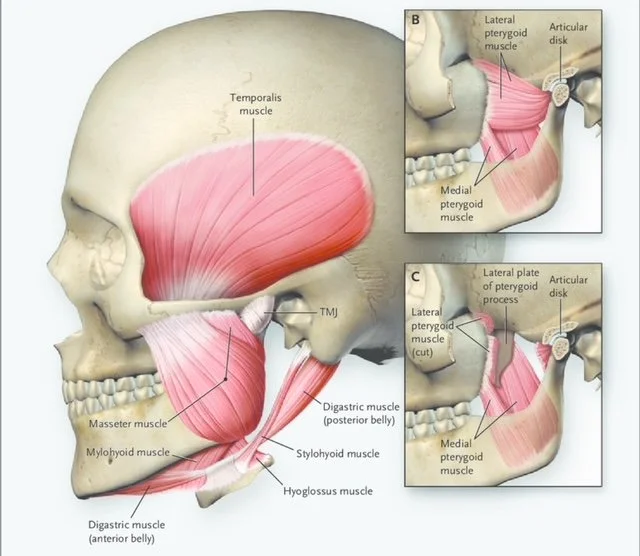
The masseter muscle is one of the strongest muscles in the body for its size. Located on the side of the face it runs from the cheekbone ( zygomatic arch) to the lower jaw (mandible) and is responsible for chewing, clenching, produces significant biting force and contributes to jaw stability.
When the masseter becomes tight from stress, grinding, clenching, or poor posture, it can cause:
Persistent jaw pain
Tension headaches
Stiffness
Facial soreness
Restricted jaw movement
Chronic tightness in this muscle can pull the jaw slightly out of alignment and contribute to ongoing TMJ dysfunction.
The Lateral Pterygoid: A Hidden Source of Jaw Pain
The lateral pterygoid is a deep jaw muscle that is located in the infratemporal fossa and helps to open the mouth, protrudes the jaw, moves side to side and guides the movement of the joint disc inside the TMJ. This muscle also helps to stabilize the TMJ articular disc.
When this muscle becomes tight, has spasms, trigger points or becomes imbalanced, it may contribute to:
Jaw clicking or popping
Pain when opening
Jaw deviation
Locking episodes
Pain radiating into the temples (temporals muscle )
Because this muscle is deep and difficult to access, it often goes untreated — yet it plays a significant role in persistent TMJ pain.
Medial Pterygoid: The Correlation to Ear Pressure and Pain
The Medial Pterygoid is also a deep jaw muscle, when this muscle tightens up it causes deep aches in the jaw, ear and throat. Trigger points in the muscle disrupt normal jaw function and pressure regulation in the ear. You may experience ear fullness and pressure in the ear that can mimic sinus issues. The symptoms can get get worse with increased movement such as yawning, chewing or grinding your teeth. Other symptoms of a tight Medial pterygoid include:
Sore throat sometimes affecting swallowing
Aching or tightness in tongue
Discomfort felt along the TMJ and along the jawbone
Another muscle that contributes to jaw pain and tightness, this muscle is best manipulated intra-orally.
Temporalis: Contributor to Headaches and Jaw Pain
Because our bodies are interconnected another muscle we want to address in TMJ work is the Temporalis. This fan shaped muscle located on either sides of the head in the temporal fossa is used for chewing and closing the jaw. It also helps to hold the mandible in position. The temporalis contributes to headaches related to jaw pain and can house trigger points that often refer myofascial pain into the upper teeth, jaw and ears. Some other symptoms can include:
Pain behind the eyes
Tooth sensitivity especially to cold
Ear pain and pressure
The temporalis is a very important muscle you do not want to skip over as it can hold a lot of unneeded tension.
How TMJ Massage Therapy Helps
Targeted TMJ massage in Salt Lake City can help:
✔ Release and relax tight jaw muscles
✔ Improve blood flow and reduce inflammation
✔ Increased range of motion
✔ Reduce clenching and grinding
✔ Increased circulation
✔ Decrease headaches and facial pain
✔ Calm the nervous system and provides stress relief
TMJ sessions may include:
External jaw muscle release
Gentle intraoral (inside the mouth) work
Neck and shoulder treatment
Postural support techniques
Myofascial release
Cranial Sacral Therapy
Many clients notice improvements in pain levels, jaw mobility, and even sleep quality after consistent treatment.
Why Choose Jenna Baker Massage for TMJ Therapy?
At my office, TMJ treatment does not only include massage for the jaw, I also assess surrounding structures like the neck, shoulders, lats, and upper chest to address contributing tension patterns. I may also include some cranial sacral holds to help facilitate the body’s natural healing mechanisms.
Conveniently located downtown Salt Lake City, UT, my practice offers:
Personalized sessions
Gentle, focused techniques
A calm and professional environment
Education on techniques to use at home
If you’re in Salt Lake City, Millcreek, Holladay, or surrounding areas and experiencing jaw pain, specialized TMJ massage may be exactly what your body needs.
Schedule Your TMJ Massage in Salt Lake City
Jaw pain doesn’t have to be something you live with. Addressing muscular tension can dramatically improve function and comfort.
If you’re ready for natural TMJ pain relief in Salt Lake City, book a session today at Jenna Baker Massage and start restoring balance to your jaw and nervous system.